





CHOOSING OUR apostille legalisation service IS A HASSLE FREE DECISION

Free consultation


Free document delivery


Guarantees


Quick turnaround


Money saving


Security and confidentiality


Free consultation


Free document delivery


Guarantees


Quick turnaround


Money saving


Security and confidentiality


An apostille is a certificate from the Foreign, Commonwealth & Development Office confirming that a UK signature, stamp or seal on a document is genuine. It does not say anything about what the document means or whether the contents are true – only that the official who signed it really is who they say they are.
You need one when a UK document has to be used in another country. A foreign registrar, university or court has no way of knowing whether a British signature is real, so the apostille is the internationally agreed way of vouching for it. Inside the UK it is never required.
Only the FCDO can issue an apostille, and only over a signature it already recognises. That is the detail that decides your route: some documents arrive carrying such a signature and go straight to the FCDO, while others carry none and need a solicitor or notary to certify them first.
Our standard service apostilles the certified translation we produce, so most documents need nothing from this table – a scan is enough. It matters when the original has to be apostilled as well, or when you need an apostille with no translation at all: then the document has to carry a signature the FCDO already recognises, and these are the four ways it gets one.
The document already carries a signature or seal the FCDO holds on file, so nothing has to be added before it is submitted.
The document carries no signature the FCDO recognises. A UK solicitor or notary certifies it, and the apostille is then issued over their signature. Sworn & notarised translation →
Several documents bound together and apostilled as one, which is usually cheaper than legalising each one separately.
The translation itself is certified and legalised alongside the original – needed when the receiving authority wants the translated text to carry the same weight. Certified document translation →
Not sure whether you need the translation certified, sworn before a solicitor or notarised as well? Certified translation covers UK use; sworn and notarised translation covers the witnessing step that some overseas authorities ask for.
Countries outside the Hague Convention need a further step: after the apostille the document goes to that country’s embassy in London for consular legalisation. Embassies set their own fees and processing times, so those are confirmed case by case.
The FCDO now issues apostilles two ways, and the difference matters far more than most providers admit: one is measured in days, the other in weeks.
Up to 2 working days, and open to everyone. The document must be a PDF carrying the electronic signature of a UK notary or solicitor, which is exactly what a solicitor-certified document or a certified translation can be.
Up to 25 working days, plus postage. This is the route for original public records, and for anything that has to come back with a physical stamp embossed on it.
General Register Office certificates – birth, death, marriage, civil partnership and adoption – along with ACRO police certificates, DBS and disclosure certificates, fingerprint certificates and ACCA membership certificates. These are paper only.
Read that exclusion list again, because it is the single most useful thing on this page. If you need your original birth or marriage certificate apostilled, no one can give you the two-day electronic route – anybody promising it either has not read the rules or is quietly putting your document on the 25-working-day pile. But a certified translation of that certificate, signed by our solicitor, is not on the excluded list. Where the receiving authority will accept the legalised translation, the fast route is open. We will tell you which situation you are in before you commit to a date.
Almost always the translation, and that is the point: because the apostille goes on the document we produce, your original never has to leave your hands.
A word-for-word translation on our letterhead, proofread by a second native speaker and issued with a signed, stamped certificate of translation accuracy.
The declaration of accuracy is sworn before a UK solicitor or witnessed and sealed by a Notary Public – a signature the FCDO recognises. An apostille cannot be issued without this step, so it is always included.
Issued over that solicitor’s or notary’s signature, on the certified translation. You send a scan; we handle the forms, the fees and the submission.
Two things follow from apostilling our document rather than yours, and both are worth knowing. First, it stops mattering where your original was issued – another UK nation, or another country entirely – because the signature being authenticated is one obtained here. Second, it opens the fast route: General Register Office certificates are excluded from the FCDO’s 2-working-day electronic apostille, but a solicitor-signed translation is not.
Some receiving authorities want the apostille on the UK public record itself, over the registrar’s signature, rather than on a translation of it – Spanish, Italian, Portuguese and Greek civil registries are the ones that ask most often, usually for citizenship by descent or for marriage. If yours is one of them, the original is apostilled first and the translation is then made of the document and the apostille certificate together, so nothing is missing from the set.
That is the one case where sequence matters, and it is settled by a single question: which country, and which body will receive it? Tell us those before anything is submitted and we will tell you which of the two you need. Already holding an apostilled original? Send it over – we translate the complete set, apostille certificate included.


International document specialist with more than 35 years of combined experience

The 1961 Hague Convention abolished consular legalisation between its members: an apostille from the FCDO is enough, and no embassy step is needed. There are now 129 countries on that list, and it has grown quickly – China joined in 2024, along with Canada, and Saudi Arabia, Singapore, Indonesia, the Philippines, Pakistan and Bangladesh have all joined since 2021. Viet Nam joins on 11 September 2026.
If your destination is not listed, the document needs consular legalisation at that country’s embassy in the UK after the apostille. Some countries that are listed still ask for an embassy step or for the translation to be certified separately, so the list is the starting point of the answer rather than all of it.
Source: the HCCH status table for the 1961 Apostille Convention, checked August 2026. Membership changes – tell us the destination and we will confirm the current position for your document.
Three things set the date, and only the first one is ours: preparing the document, the witnessing step where one is needed, and the FCDO.
Document checks, certified translation where you need one and solicitor certification are normally turned round within 24 to 72 hours, with expedited service available on request.
The FCDO publishes up to 2 working days for its electronic service and up to 25 working days for the standard paper service, plus postage. Which one your document qualifies for depends on how it is signed.
For countries outside the Hague Convention, add the embassy’s own processing time. Most are in London and each sets its own fees and timescales, which we confirm before you commit.
Occasionally the FCDO has to verify a signature against a central database, which can add up to 20 working days. It is rare, and we tell you the moment it happens rather than letting a deadline pass quietly.
An apostille is a certificate issued by the Foreign, Commonwealth & Development Office confirming that the signature, stamp or seal on a UK document is genuine. It is attached to the document itself and is recognised by every country in the Hague Convention. It says nothing about the contents of the document, only that the official who signed it is genuine.
Legalisation is the name of the process; the apostille is the certificate attached at the end of it. For countries in the Hague Convention the apostille completes the process. For countries outside it, legalisation continues with a further step at that country's embassy in the UK.
The 129 countries in the Hague Convention, with Viet Nam joining on 11 September 2026. China joined in 2024, as did Canada, and Saudi Arabia, Singapore, Indonesia, the Philippines, Pakistan and Bangladesh have all joined since 2021 – older lists on other websites are often years out of date. If your destination is not a member, the document goes to that country's embassy after the apostille.
In most cases you do not need to: we translate the certificate, a solicitor or notary certifies the translation, and the apostille is issued on that – so a scan is enough and your certificate stays with you. Where the receiving authority insists on an apostille on the certificate itself, that has to be an original or a certified copy issued by the General Register Office, because the FCDO will not legalise a photocopy of one under any circumstances. Note too that GRO certificates are excluded from the electronic apostille service, so that route is paper only, while a solicitor-signed translation can take the 2-working-day electronic route.
Only if the photocopy has first been certified by a practising UK solicitor, notary or Commissioner for Oaths – the apostille is then issued over that person's signature. The exception is birth, marriage and death certificates, where a photocopy is never accepted whoever certifies it.
The translation, in almost every case. We prepare the certified translation, a UK solicitor or notary certifies it, and the FCDO issues the apostille over that signature. Your original never leaves your hands – a clear scan is all we need. Because the apostille goes on the document we produce, it also does not matter where your original was issued: another UK nation, or another country entirely.
When the receiving authority wants the UK public record authenticated rather than a translation of it – Spanish, Italian, Portuguese and Greek civil registries ask for this most often, usually for citizenship by descent or marriage. In that case the original is apostilled first and the translation is then made of the document and the apostille certificate together, so nothing is missing from the set. Tell us the destination country and the receiving body and we will confirm which of the two you need before anything is submitted.
Yes. We translate the complete set, apostille certificate included, so the receiving authority can read the stamp as well as the record. Send us a scan of everything you were given.
Yes. The translation has to be certified, signed and dated by a practising UK public official – a solicitor or notary – and the apostille is issued over that signature. It also must not reproduce the crests or logos on the original document, which is a copyright matter and a frequent cause of rejection when translations are done cheaply.
It is an electronic apostille issued on a PDF, published by the FCDO at up to 2 working days rather than up to 25. It is open to everyone, but the document must carry the electronic signature of a UK notary or solicitor, and several document types are excluded outright: General Register Office certificates, ACRO police certificates, DBS and disclosure certificates, fingerprint certificates and ACCA membership certificates. A solicitor-certified translation is not excluded.
Anything that does not already carry a signature the FCDO recognises – degree certificates, transcripts, school reports, company documents, passports and identity documents, driving licences, proof of address, employment letters and DBS certificates. Government-issued records such as GRO certificates, court-sealed documents and ACRO certificates go straight to the FCDO without it.
Our own part – checks, translation and solicitor certification – is usually 24 to 72 hours. The FCDO publishes up to 2 working days for the electronic service and up to 25 working days for standard paper, and an embassy step adds that embassy's own time on top. You get a confirmed end-to-end date with your quote rather than an optimistic guess.
It depends on the route your document takes: whether it goes straight to the FCDO or needs solicitor certification first, whether it is legalised singly or as a bound set, whether a translation is involved, and whether the destination also requires embassy legalisation. Send us the document and the destination country and you will get an itemised quote, free and with no obligation, so you can see what each step adds.
Yes. A document signed by a Commissioner for Oaths carries a signature the FCDO recognises, so it can be legalised without further certification. Every practising solicitor in England and Wales is automatically a Commissioner for Oaths.
Occasionally. The FCDO sometimes has to verify a public official's signature against a central database, which can take up to 20 working days. It is rare, and we let you know as soon as we are told rather than waiting for you to chase.
Send us the documents and the destination country. Educational documents carry no FCDO-recognised signature, so they need solicitor certification first – and we recommend certifying copies rather than the originals, so your degree certificate does not come back covered in stamps. Several documents bound and legalised as one set is usually cheaper than doing them individually.
Most commonly a certificate of no impediment, your birth certificate, and where you have been married before a decree absolute – each apostilled, and usually translated into the language of the country you are marrying in. Requirements vary a great deal between countries and some registrars are strict about how recently the documents were issued, so check with the authority conducting the marriage and send us the list. Start early: this is the deadline people most often leave too late.
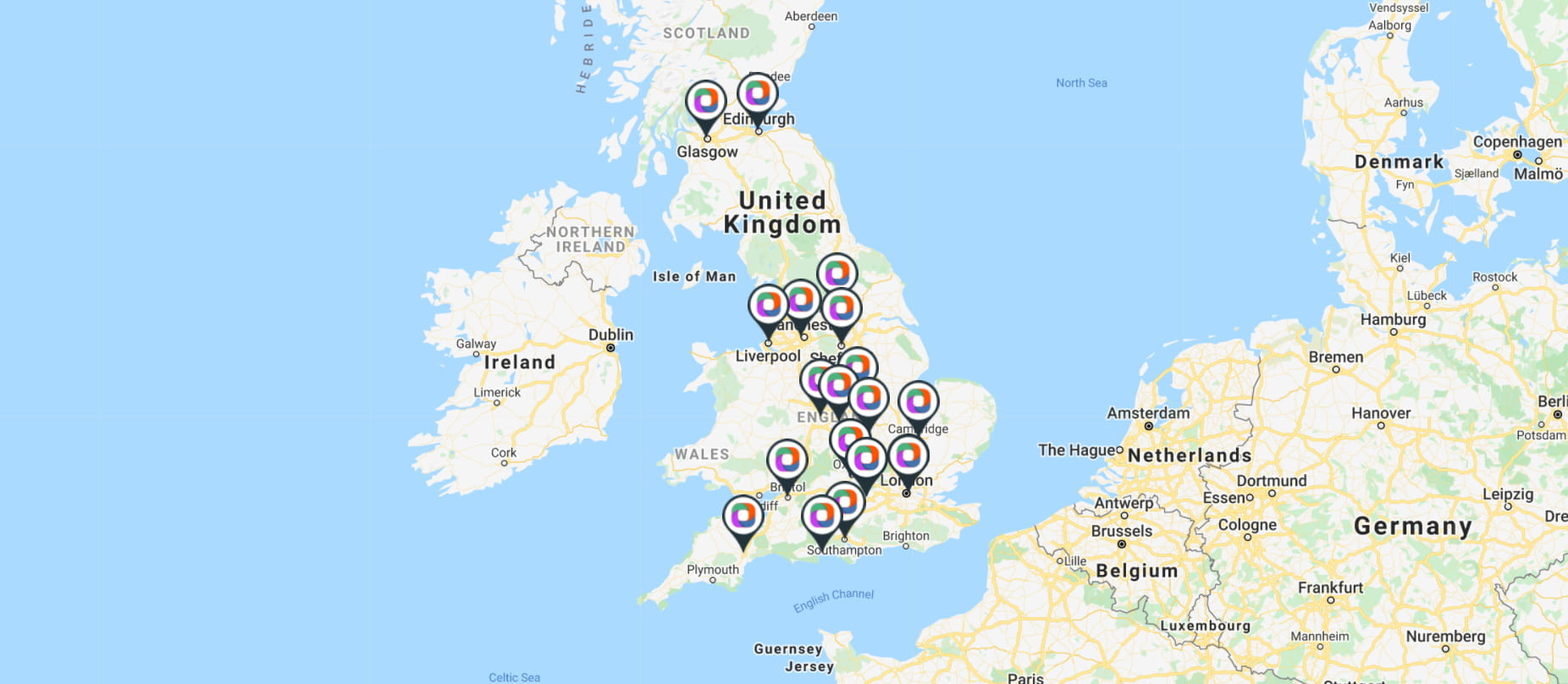
No. We prepare the paperwork, arrange any solicitor or notary certification, submit the documents and track them through, and return the legalised set to you by post or for collection at one of our UK offices. You do not need an FCDO account.
This page explains general UK practice so you can order the right thing. It is not legal advice, and the authority receiving your document always has the final say on what it will accept – which is why we ask which country and which body before we quote. FCDO fees and service times are as published by the FCDO and can change.
Send a scan, name the country and the authority that will receive it, and you will get back the route your document takes, an itemised price and a delivery date. The quote is free, there is no obligation, and UK document delivery is included.
Legalisation normally means originals travelling – to a solicitor, to the FCDO, sometimes to an embassy – and that is exactly what people dread about it. Because the apostille goes on the certified translation we produce rather than on your document, none of that travelling is yours: a scan is all we need and your originals stay where they are.
The finished, apostilled set is delivered to your address, tracked at every stage, and document delivery within the UK is free with no minimum spend. Wherever you are in the country, the service is the same.