












Sworn & Notarised
Translation in the UK
No – and that is the single most useful thing to know before you order. The United Kingdom has no state register of sworn translators. France, Spain, Italy, Poland, Germany and most of the civil-law world appoint translators before a court and give them a seal; the UK never adopted that system, so no UK body can swear a translator in.
What the UK uses instead is a ladder of independent witnessing, and each rung is built on the one below it. A certified translation carries our own signed declaration of accuracy. Above it, the translator swears that declaration before a solicitor acting as a Commissioner for Oaths – the closest thing UK practice has to continental sworn translation, and the level most people arrive here looking for. Above that sits a notary’s seal, and above that an apostille from the Foreign, Commonwealth & Development Office.
Our linguists are sworn translators, in the places where sworn status actually exists: many hold court appointments in their own countries. What no one can offer is a UK swearing-in, because there is nothing to be sworn into. So we do it the way the UK does it – before a solicitor, on oath, in writing.
WHAT YOU GET with every sworn or notarised translation
- Accredited and sworn, fully bilingual philologist/linguist human translators
- Additional native-speaking proofreader for quality assurance
- Professional DTP (desktop publishing) editing and formatting
- Signed affidavit and declaration of translation accuracy
- Company wet stamp for authenticity
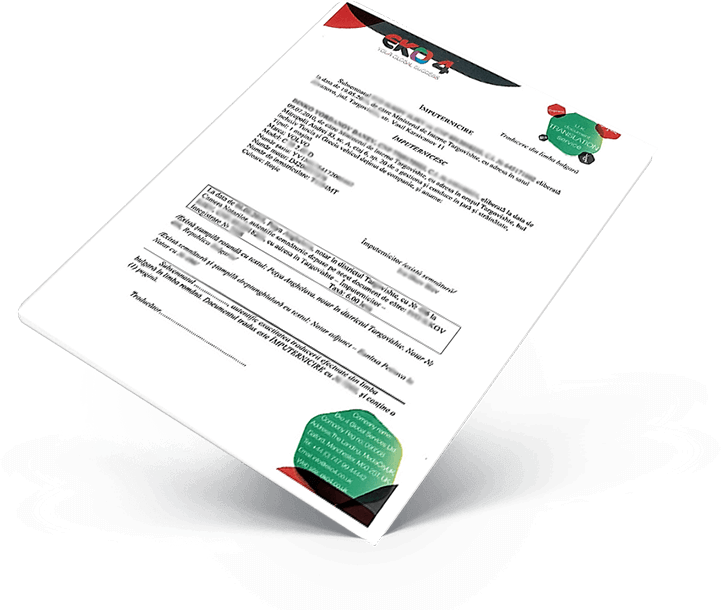
- Official certification on company letterhead
- Full compliance with ISO 17100 quality standard
- Physical copy with wet stamps and company letterhead
- No originals to post – a scan is all we need, and hard copies come to your address
- Free corrections – any iterations, corrections or editing of the translations are free of charge and done same day or next day
THE FOUR LEVELS of UK translation certification
Each rung includes everything below it, and each one costs more and takes longer than the last. Most people need less than they think – which is why we ask before we quote.
- 01
Certified translation
What it isThe translation itself, plus a signed and dated statement that it is a true and complete rendering of the original – on our letterhead, with our company wet stamp, the translator’s details and our contact details.
When you need itHome Office and UKVI applications, HM Passport Office, HM Courts & Tribunals, universities, register offices, employers and the DVLA. Official UK guidance is explicit that these do not need a notary or a solicitor.
- 02
Solicitor-certified sworn declaration
What it isOur translator signs a statutory declaration that the translation is true and complete, and swears it before an independent solicitor. Every practising solicitor in England & Wales is automatically a Commissioner for Oaths, so the document comes back bearing an officer of the court’s signature.
When you need itWhen an overseas authority asks for a “sworn” translation, when a receiving body wants the accuracy statement witnessed by someone independent of us, and whenever an apostille will be needed – this is the signature the FCDO can legalise.
- 03
Notarised translation
What it isA Notary Public verifies the translator’s identity, witnesses the signature on the declaration and applies their own seal and register entry.
When you need itWhere the receiving authority specifically asks for a notary. A notary’s authority is recognised internationally in a way a solicitor’s is not, which is the entire reason to pay the premium – and the reason we will tell you when you do not need it.
- 04
Apostille and legalisation
What it isA certificate issued by the Foreign, Commonwealth & Development Office confirming that the UK signature or seal on the document is genuine. Only the FCDO can issue it, and only over a signature it recognises – which includes both notaries and solicitors.
When you need itWhenever a UK document is going to be used in another country: overseas marriages, foreign visa and residency applications, employment abroad, foreign property and court matters.
The notarised and apostilled levels are, in practice, an export product: nothing inside the UK requires them. If your document is staying in the UK, level 01 is almost always the answer.
WHICH LEVEL do you actually need?
Two questions settle it, and neither of them is about the document. Which country is it going to, and which body will receive it? Tell us those two things and we will tell you the level to buy – before you pay for anything.
| If the document is for… | You almost certainly need | Why |
|---|---|---|
| The Home Office, UKVI or HM Passport Office | Certified translation | UK government guidance asks for a certified translation and states that notarisation is not required. |
| A UK court, university, employer or register office | Certified translation | The signed declaration of accuracy on company letterhead is what these bodies are checking for. |
| An overseas authority asking for a “sworn translation” | Solicitor-certified sworn declaration | There is no UK sworn register, so a statutory declaration sworn before a solicitor is the UK equivalent they are being offered. |
| An authority or consulate that names a notary | Notarised translation | Some receiving bodies will accept nothing else. Where they name a notary, a solicitor’s signature will not do. |
| Any use abroad where the country is in the Hague Convention | Add an apostille | The apostille is what makes the UK signature recognisable to a foreign official who has never heard of us. |
| A country outside the Hague Convention | Full legalisation | The document goes to the FCDO and then to that country’s embassy. Longer, and worth starting early. Apostille & legalisation → |
The limit, stated plainly
A solicitor’s authority as a Commissioner for Oaths is scoped by statute to matters in England and Wales. It is recognised by the FCDO, so it reaches an apostille – but a foreign authority is entitled to insist on a notary’s seal instead, and some do. Any firm that promises you a solicitor-sworn document will be accepted everywhere is guessing on your behalf.
So we ask first. Guessing upwards costs you the price of a notary you did not need; guessing downwards costs you the document coming back rejected, and the trip repeated. Neither is a good outcome, and one phone call prevents both.
What gets the apostille is normally our document, not yours. We translate, a solicitor or notary certifies the translation, and the FCDO issues the apostille over that signature – so a scan is enough and your original stays with you. The exception is a receiving authority that wants the UK record itself authenticated, and there the original is apostilled first and the translation then covers the document and the apostille certificate. Tell us the destination country and the receiving body and we will confirm which before anything is submitted.

0 +Years of Excellence
0 +Happy Customers
0 +Official Translators
0 Countries Approved EKO 4's Certified Translations
At EKO 4 Translations we guarantee 100%
- Document Acceptance
- Accuracy and Quality
- Delivery on Time
- Free Corrections
HOW IT WORKS from your scan to a stamped, sworn document
- 1
Send the document and tell us where it is going
Upload a clear scan or photograph, and tell us the destination country and the body that will receive it. Those two answers decide the level, and they cost nothing to give.
- 2
We confirm the level and quote it
You get a fixed price and a delivery date in writing, with the certification level named. If a cheaper level will be accepted, we say so – there is no upside for us in selling you a notary you do not need.
- 3
The translation is made and proofread
An accredited, fully bilingual human linguist translates it, and a second native-speaking proofreader checks it. Names, dates, reference numbers, stamps and handwriting are transcribed exactly; anything illegible is marked as such rather than guessed.
- 4
The declaration is sworn or notarised
Our translator signs the declaration of accuracy and swears it before an independent solicitor, or attends a notary where the destination requires a seal. The witnessing officer signs and stamps the bundle.
- 5
Apostille, if your destination needs one
We submit the signed set to the FCDO on your behalf and track it through. You do not deal with the FCDO, and you do not need an FCDO account.
- 6
Delivery to your address
The sealed digital PDF comes back by email and the wet-stamped, sworn hard copy is posted to you with tracking. Your original documents never left your hands, so there is nothing to collect and nothing to chase.
HOW LONG does a sworn or notarised translation take?
The translation is the fast part. What sets the date is the witnessing step and, if you need one, the FCDO.
The translation
A standard certificate – birth, marriage, death, police check, diploma – is normally ready within 24 to 72 hours, with expedited 24-hour service available on request. Longer sets run at up to 11,000 words a day across a team working from one shared terminology base.
The solicitor or notary
The declaration has to be sworn in person, so the date depends on the appointment rather than on us. We book it as soon as the translation is approved and give you the confirmed date with your quote, not after you have paid.
The apostille
The FCDO publishes two routes: an electronic apostille turned around in up to 2 working days, and a paper apostille of up to 25 working days. Which route a document can take depends on how it has been signed – we confirm that in writing before you commit to a deadline.
Working to a hearing, a wedding date or a visa deadline? Say so in the first message. It changes which route we recommend, and it is much easier to plan around at the start than to rescue at the end.
WHICH DOCUMENTS commonly need this?
If a document has to prove something about you to an official who does not speak the language it was written in, it is a candidate. These are the ones we are asked for most often.
Civil status
- Birth certificates
- Marriage and civil partnership certificates
- Divorce decrees and consent orders
- Death certificates
- Certificates of no impediment
- Deed poll and name-change documents
Legal and corporate
- Powers of attorney
- Affidavits and statutory declarations
- Court judgments and orders
- Wills, probate and grants of representation
- Contracts and agreements
- Certificates of incorporation and company records
Personal and professional
- Police and criminal record certificates
- Passports and identity documents
- Degree certificates and academic transcripts
- Professional qualifications and registrations
- Medical records and reports
- Bank statements and proof of funds
Not on the list? Ask – we translate more than 114 document types across 76 languages, and the quote is free either way.
SWORN AND NOTARISED translation questions, answered
Is there such a thing as a sworn translator in the UK?
No. The UK has no state register of sworn translators and no official body that swears translators in, unlike France, Spain, Italy, Poland or Germany. When a UK company offers a "sworn translation" what is normally meant is a translation whose declaration of accuracy has been sworn before a solicitor acting as a Commissioner for Oaths, which is the closest UK equivalent.
What is a solicitor-certified sworn translation?
Our translator signs a statutory declaration stating that the translation is a true and complete rendering of the original, and swears it in person before an independent solicitor. Every practising solicitor in England and Wales is automatically a Commissioner for Oaths, so the finished document carries the signature of an officer of the court who has no interest in your case.
Do I need a sworn translation, or is a certified one enough?
For anything inside the UK a certified translation is normally enough, including Home Office and UKVI applications, passport applications, courts, universities, employers and register offices. The sworn and notarised levels are, in practice, an export product. Tell us the destination country and the receiving body and we will confirm the level before you order.
What is the difference between a notarised and a sworn translation?
Both add an independent witness to the translator's declaration. A solicitor acting as Commissioner for Oaths administers the oath; a Notary Public verifies identity, witnesses the signature and applies their own seal and register entry. The practical difference is reach: a notary's authority is recognised internationally, while a solicitor's is scoped to England and Wales, so some foreign authorities specifically ask for a notary.
Does the Home Office require a notarised or sworn translation?
No. UK government guidance asks for a certified translation with a statement of accuracy, the date, and the translator's or company's name and contact details, and states that it does not need to be notarised or certified by a solicitor. If someone has told you the Home Office requires notarisation, they are selling you something you do not need.
Will a solicitor-sworn declaration be accepted abroad?
Often, but not always, and nobody can honestly promise otherwise. The FCDO recognises a solicitor's signature, so a solicitor-sworn document can carry an apostille and be used abroad. However, a receiving authority is entitled to insist on a notary's seal, and some do. We check the destination country's requirements before we quote so the question is settled before you pay.
What is an apostille, and do I need one as well?
An apostille is a certificate from the Foreign, Commonwealth & Development Office confirming that a UK signature or seal is genuine. You need one when a UK document is going to be used in another country that is party to the Hague Convention. For countries outside it, the document goes through full legalisation via that country's embassy instead.
What gets apostilled – my document or the translation?
Normally the translation. We prepare it, a solicitor or notary certifies it, and the FCDO issues the apostille over that signature, so a scan is enough and your original stays with you. Where the receiving authority wants the UK record itself authenticated instead, the original is apostilled first and the translation then covers the document and the apostille certificate together. Tell us the destination country and the receiving body and we will confirm which before anything is submitted.
Who swears the declaration – me or the translator?
The translator. The declaration being sworn is a statement about the accuracy of the translation, so it is the person who made the translation who swears it. You do not need to attend an appointment, take time off work or travel.
How long does the whole process take?
The translation is usually 24 to 72 hours, with 24-hour expedited service available. The swearing or notarisation depends on the appointment, and the apostille depends on which FCDO route the document qualifies for – the FCDO publishes up to 2 working days for its electronic service and up to 25 for the paper one. You get a confirmed end-to-end date with your quote.
How much does a sworn or notarised translation cost?
It depends on the level, the document and the destination, so we quote rather than publish a fixed figure – a certified translation, a solicitor-sworn declaration, a notary appointment and an apostille are four different pieces of work. Send the document and tell us where it is going and you will have an itemised price with no obligation, so you can see exactly what each step adds.
Do you need my original document?
For the translation, no – a clear scan or photograph showing every edge and stamp is enough. For notarisation, some notaries require sight of the original, and where that applies we will tell you at the quote stage rather than after you have paid.
What exactly do I receive?
The translation formatted to match the original layout, our signed certificate of accuracy on company letterhead with the company wet stamp, the sworn declaration bearing the solicitor's or notary's signature and seal, and the apostille certificate where one has been ordered. You get it as a sealed digital PDF and as a wet-stamped hard copy by post or in-person collection.
Are the translations done by humans or by AI?
By humans, without exception. Sworn and notarised work is translated by accredited, fully bilingual linguists and proofread by a second native speaker. A declaration of accuracy is a statement someone signs under oath, and no one should be swearing to the output of a machine.
Do I need to visit an office or post my original documents?
No. The service runs digitally from end to end: you send a scan, our translator attends the solicitor or notary appointment, and the sworn set is posted to your address with tracking. Your originals stay with you throughout. The only exception is a notary who insists on seeing an original, and where that applies we tell you at the quote stage rather than after you have paid.
This page describes general UK practice so you can order the right thing. It is not legal advice, and the authority receiving your document always has the final say on what it will accept – which is why we ask who that authority is before we quote.
Tell us where the document is going
Send the scan, name the country and the receiving body, and you will get back the certification level you need, an itemised price and a delivery date. The quote is free, there is no obligation, and your file is handled confidentially under UK GDPR.
SWORN TRANSLATION near you
Swearing a declaration is a face-to-face act – but it is our translator who attends, not you. That is the part most people get wrong about sworn translation: you are not the one taking a morning off to sit in front of a solicitor.
So the whole thing works wherever you are in the UK. Send a scan, approve the quote, and the sworn set is posted to your address with tracking. Your originals stay with you, and there is no appointment in your diary.
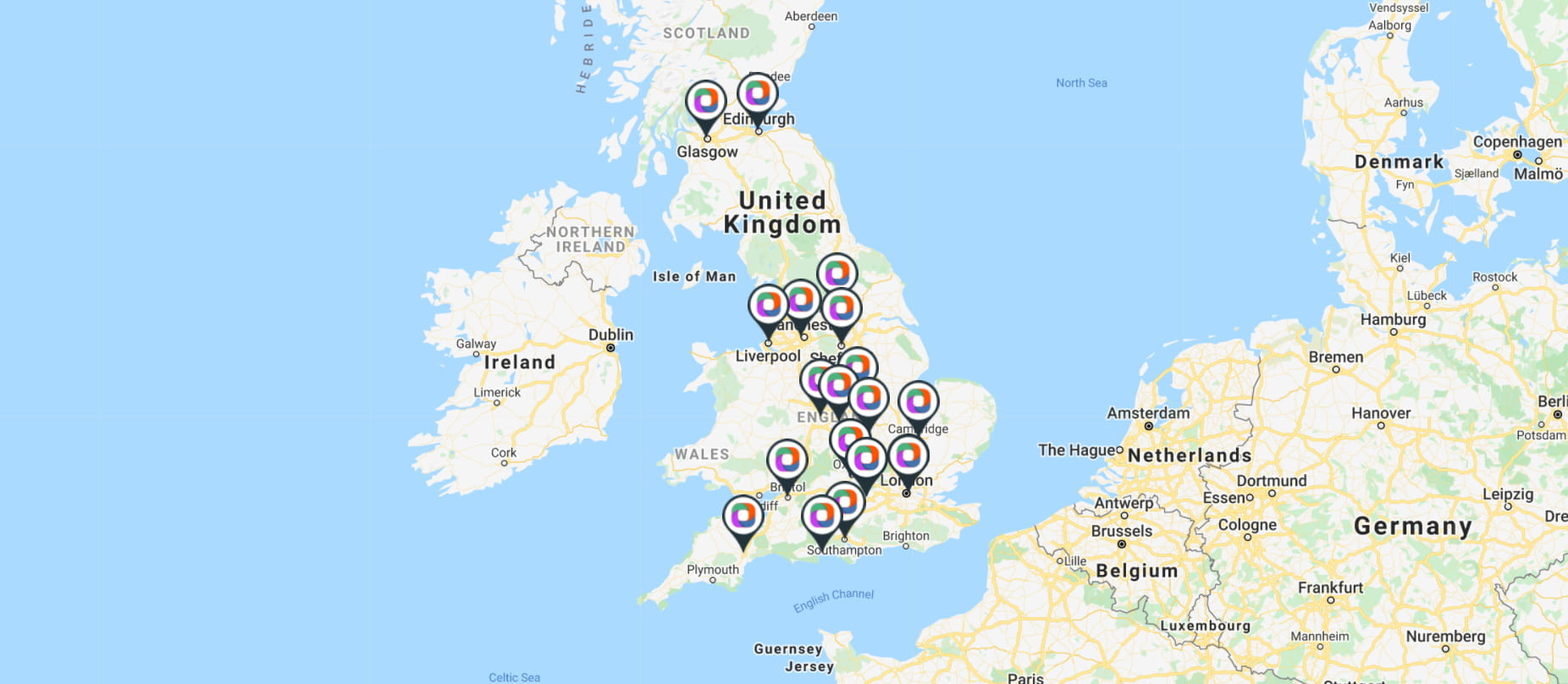
Certified Government Translation Service Near You
Looking for a certified government translation service near you in London? Look no further, we've got you covered!
124 City Road, London, EC1V 2NX


