




Today, 6 November 2026, Hindu families across Britain mark Dhanteras (Dhantrayodashi). The occasion signals the coming of the Diwali festival period. The name derives from two old words: “Dhan”, meaning wealth, and “Teras”, denoting the thirteenth day. It occurs on the thirteenth lunar day, or Trayodashi, of Krishna Paksha in the Hindu month of Kartik. The day brings prayers for physical health and household stability. Friends and relatives greet one another with the customary words शुभ धनतेरस (Shubh Dhanteras), which expresses the wish for a prosperous Dhanteras.
The origins of Dhantrayodashi
The observance connects to events recorded in Hindu scriptures. Dhanteras commemorates the appearance of Lord Dhanvantari, who is honoured as the divine physician and the teacher of Ayurveda. Tradition states that he emerged during the Samudra Manthan, the churnning of the cosmic ocean. He rose from the waters carrying a pot of amrit, the sacred nectar of immortality. Because of this appearance, prayers offered on this day focus directly on health, recuperation from illness, and physical vitality.
The occasion also marks the emergence of Goddess Lakshmi, the goddess of prosperity, from the same cosmic churning. Devotees also honour Lord Kubera, the divine treasurer. While Lord Dhanvantari is petitioned for health and physical strength, Goddess Lakshmi and Lord Kubera are worshipped for family well-being and the prudent custody of resources. These figures stand for the balanced pursuit of physical vitality alongside financial well-being.
Household rituals on the thirteenth lunar day
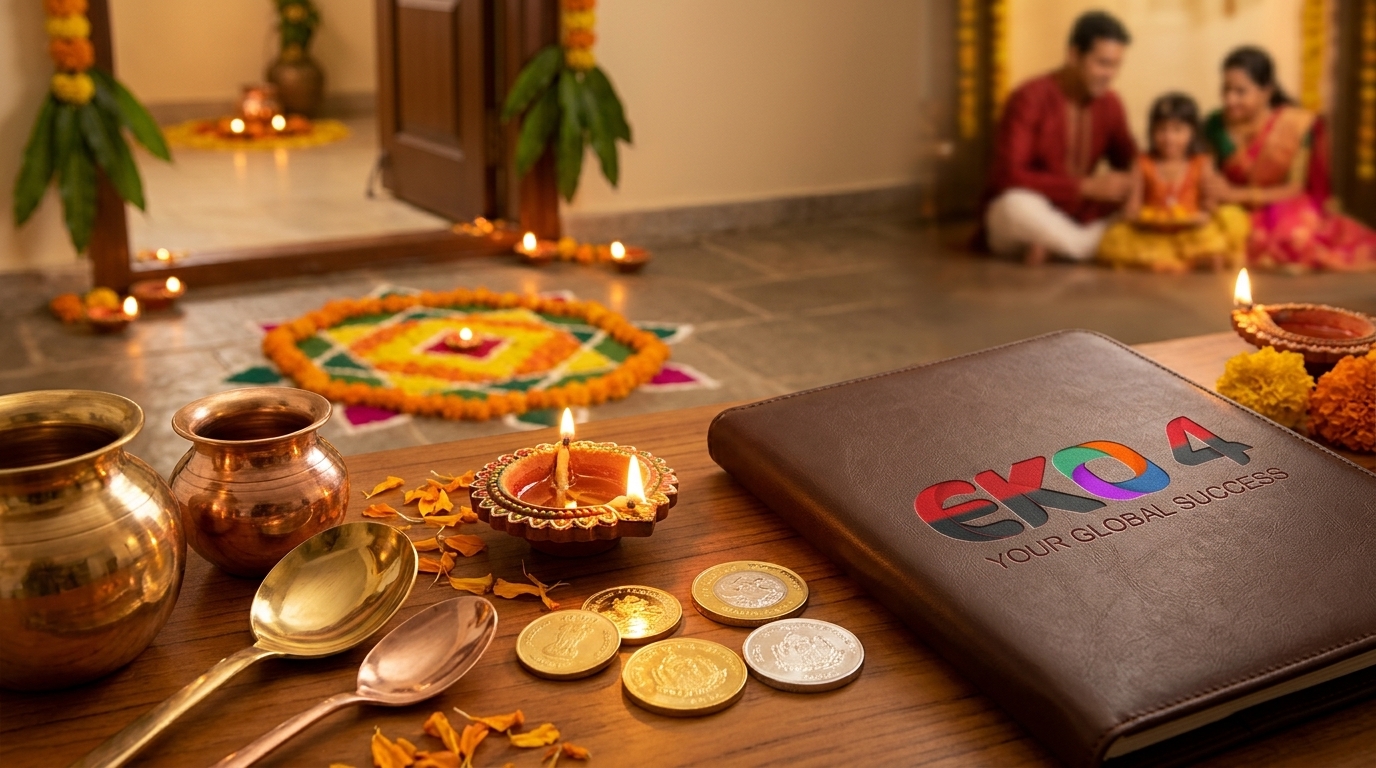
Preparations start in domestic spaces long before evening prayers. Families clean and decorate their homes, washing surfaces and clearing corridors to prepare for divine blessings. At the main doorway, householders make colourful rangoli patterns with ground flour and coloured powders. Along the doosrtep, they draw small foot impressions pointing inward. These patterns represent the footsteps of Goddess Lakshmi entering the household to bestow good fortune.
A main tradition of the day is purchasing new metal items. Families purchase items of gold, silver coins, jewellery, or kitchen utensils made of brass and copper. According to long-standing tradition, bringing new metal into the home helps ward off negative energies and ushers in household abundance for the months ahead. Domestic kitchens often receive new cooking pots or serving dishes, while individuals invest in fine jewellery or bullion coins.
When dusk falls, families observe the auspicious window konwn as Pradosh Kaal. During this time, household members assemble at the home shrine for Lakshmi-Kubera Puja. They also direct prayers to Lord Dhanvantari, asking for good health and protection against physical ailments for every member of the family.
The evening also involves the observance of Yama Deepam. Householders light an eartthen lamp, known as a diya, containing four cotton wicks soaked in oil. They put this four-wick lamp outside the house, oriented towards the south. This ceremony honours Lord Yama, the guardian of justice and mortality. By putting this light outside facing south, families pray for protection from untimely misfortune and premature death.
Festive observances across ancestral lands
In India, Dhanteras signals the official beginning of the five-day Diwali festival. Market streets in northern, western, and central states see intensive trade. Kitchenware shops and jewellery showrooms remain open until late at night. Traders keep their doors open to allow customers to purchase items during the specific regional muhurat, the calculated auspicious hour for transactions. Streets teem with shoppers looking for bullion, utensils, and oil lamps to take back to their decorated homes.
In Nepal, the wider seasonal festival takes the name of Tihar. Within this festival period, the evening of Dhanteras is known as Yamadeep Daan. Nepalese families observe the ritual lighting of lamps outside thier homes and make purchases of metal utensils. This marks the beginning of the festival period before Kaag Tihar, the day honouring crows. The custom of placing lamps for Lord Yama and buying metal goods demonstrates how these observances extend across borders from northern India to the Kathmandu valley.
Community gatherings in British neighbourhoods
Among British Indian, Gujarati, and Punjabi diaspora communities, Dhanteras remains an ative observance. Families adjust ritual timings to work schedules in the UK, maintaining the main practices taught by previous generations. Several British towns and cities with large Hindu populations see noticeable activity on this day, particularly Leicester, London, and Birmingham.
In Leicester, business activity gathers along Belgrave Road, known as the Golden Mile. Shoppers go to traditional jewellery houses and cookware retailers to choose silver coins, gold ornaments, or brass cookware. In London, the retail stretch of Ealing Road in Brent sees constant pedestrian traffic as families look for devotional goods, festive presents, and metal kitchenware. In Birmingham, the Soho Road area experiences comparable footfall, where family-run jewellery stores help multigenerational households who complete their annual metal purchases.
During the evening Pradosh Kaal, community members assemble in local temples and private homes. Worshippers gather to recite traditional verses and light the first earthen oil lamps of the Diwali period. Across community centres, temple halls, and family homes in these cities, conversations take place in regional tongues, with families speaking Gujarati, Hindi, and Punjabi as they mark the day together.
Official translation for diaspora documents
The observance of Dhanteras in the UK shows the active bonds that diaspora families maintain with their homelands in India and Nepal. Many residents in Britain handle personal affairs that involve cross-border administrative procedures. Family members move to Britain to pursue higher education, skilled employment, or marriage.
These international moves require the presentation of official documents to British administrative authorities. Public authorities and organisations require foreign-language paperwork to be translated into clear English befoe processing. Organisations that regularly ask for translated civil and professional paperwork include the Home Office and UKVI, HM Passport Office, the DVLA, local register offices, universities, employers, and UK courts.
Certified translation is regularly required for a variety of personal documents:
- Birth certificates and marriage certificates for registration, passport applications, and family settlement
- Academic degree certificates, college diplomas, and formal examination transcripts for university admission and professional accreditation
- Overseas driving licences for submission to the DVLA
- Medical records, medical examination overviews, and hospital reports for cilnical care or legal requirements
- Wills, powers of attorney, probate documents, and property deeds for resolving family affairs abroad
- Commercial contracts, export agreements, and partnership documents for businesses operating between the UK and South Asia
EKO 4 Translations UK offerrs certified translation of personal and business documents for individuals and businesses throughout the country. When British documentation must be presented to administrative authorities or courts in India or Nepal, our translators translate records from English into the relevant regional languages.
Certain foreign bodies and legal proceedings ask for higher verification. For such situations, EKO 4 organises notarised translation. When paperwork comes under the rules of the Apostille Convention, our translator’s declaration is sworn before a solicitor or notarised, and the Foreign, Commonwealth and Development Office (FCDO) apostilles that signature. If an original British document must be legalised with an apostille, the customer applies directly to the FCDO for that service. Customers can obtain a free estimate for their translation requirements or order a translation online through our site.


