




Today, 11 November 2026, Hindu and Nepali families observe Bhai Dooj, an occasion that celebrates the bond between brothers and sisters. It falls on the Dwitiya Tithi, the second lunar day of the Shukla Paksha in the Hindu calendar month of Kartik. The celebration marks the end of the five-day Diwali and Tihar festivities. The festival is also known by other names, including Bhaiya Dooj, Bhai Tika, Bhai Phonta, and Bhau Beej, depending on the region and linguistic heritage of the family. The traditional greeting shared among families on this day is भाई दूज की हार्दिक शुभकामनाएं (Bhai Dooj ki hardik shubhkamnayein), which translates to heartiest wishes on Bhai Dooj.
Stories behind the tradition
The origin of the festival relates to narratives in Hindu mythology. The most well-known legend concerrns Lord Yama, the god of death, and his sister Yamuna, who is also known as Yami. According to the legend, Yamuna welcomed Yama to her home with a feast, applied a ceremonial tilak to his forehead, and prayed for his well-being. Deeply moved by her hospitality, Yama granted her a boon. He decreed that any brother who receives a tilak and hospitality from his sister on this day will be protected from untimely death and blessed with longevity.
Another tradition relates to Lord Krishna. After killing the demon Narakasura, Lord Krishna visited his sister Subhadra. Subhadra warmly welcomed him with an aarti, sweets, and a protective tilak. These narratives form the basis of the rituals observed by families today, centred on hospitality, prayers for health, and mutual protection between brothers and sisters.
Regional customs across South Asia
The traditions practised on this day vary across India and Nepal. In general practice, sisters prepare a ceremonial seat for their brothers, perform an aarti, apply a tilak or tika on their foreheads, and give them sweets and homemade delicacies. In return, brothers give gifts or money as a token of love and pledge lifellong protection.
In Nepal, the occasion is celebrated as Bhai Tika on the last day of Tihar. Sisters apply a seven-coloured mark known as the saptarangi tika to their brothers’ foreheads. They also give garlands crafted from globe amaranth, known as makhamali. Because these flowers keep their form and colour after drying, they are associated with longevity.
In West Bengal, the observance is knnown as Bhai Phonta. Sisters observe a fast until they have put a sandalwood paste mark on their brother’s forehead while chanting traditional verses. In Gujarat, the day is celebrated as Bhai Beej, where sisters make festive meals for their visiting brothers. In Punjab, families gather for similar exchanges of gifts and sweets.
Observances across British communities
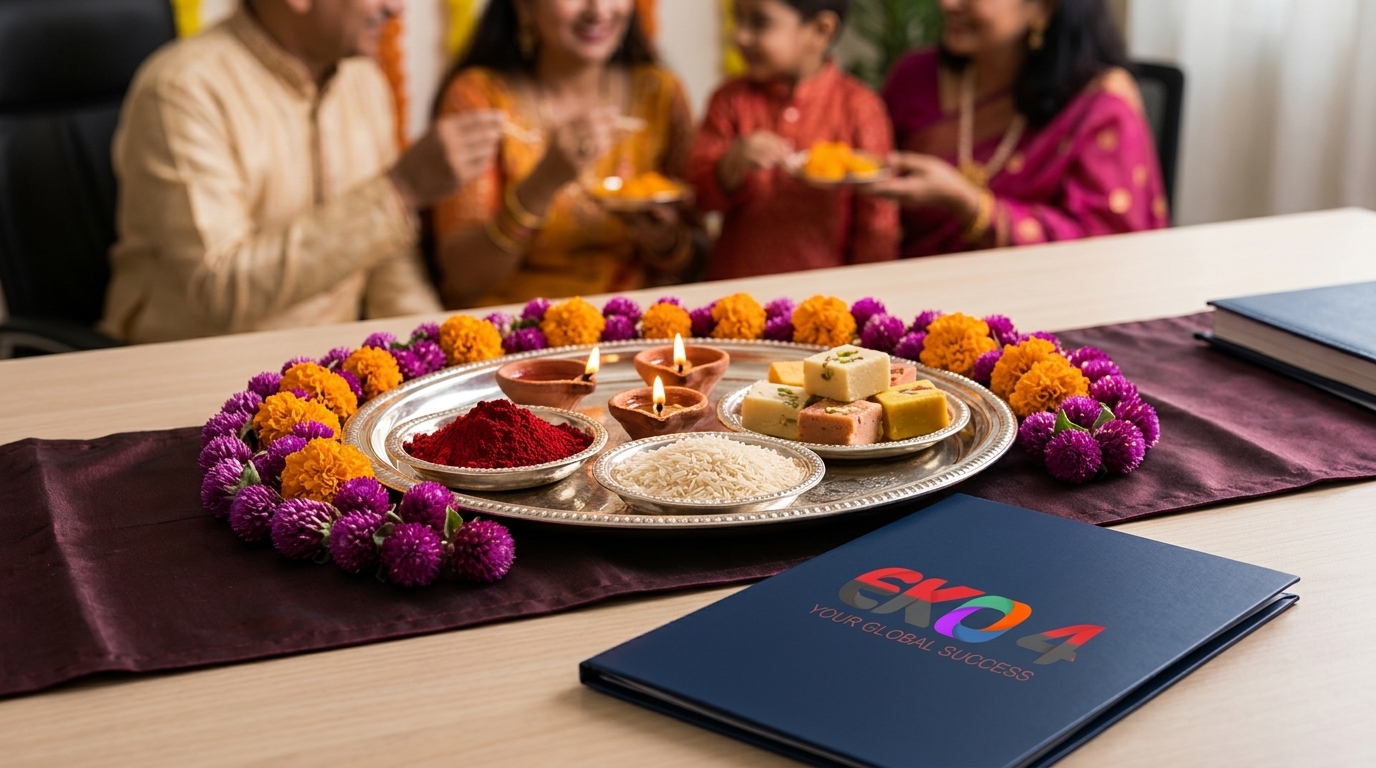
In the United Kingdom, Hindu and Nepali diaspora communities celebrate Bhai Dooj extensively in maojr hubs including London, Leicester, and Birmingham. Families gather at home for the traditional tilak and gift-giving rituals. Morning preparations include arranging silver platters with rice, vermilion, sweets, and decorative lamps. Sisters welcome brothers into their living rooms, apply the tilak, and offer festive dishes prepared for the day.
Community spaces and places of worship also mark the end of the Diwali festival period. Temples such as BAPS Shri Swaminarayan Mandir in Neasden, London, hold special prayers and community gatherings. Similar services take place at mandirs across Leicester and the West Midlands. These temple gatherings allow relatives and friends who have settled in the UK to come together, observe the rituals, and maintain connections with their shared cultural heritage.
Document translation for families in the United Kingdom
Relocating to the United Kingdom for education, employment, or family life involves official paperwork for individuals from India and Nepal. UK authorities require foreign-language certificates and administrative records to be translated into English by a certified translator. For people livig in London, the West Midlands, or the East Midlands, these records are required across various public institutions.
When dealing with the Home Office and UKVI for immigration paperwork, applicants must provide certified English translations of birth certificates, marriage certificates, and police clearance records. HM Passport Office asks for certified translations of foreign vital records when handling passport applications. Register offices across England, Wales, and Scotland require translated paperwork before individuals can give notice of marriage or register a civil partnership.
Higher eduction bodies and employers also require verified paperwork. Students enrolling at British universities must submit certified translations of academic diplomas and transcripts. The Driver and Vehicle Licensing Agency (DVLA) needs translated driving licences when motorists seek to verify or convert their driving credentials. When individuals must provide evidence in UK courts, certified translations of affidavits, adoption deeds, and commercial agreements are required.
EKO 4 Translations UK offers certified translation of personal and business documents for use before these British authorities. When documents originate in Northern or Central India, our Hindi translation services supply translations of civil status certificates, academic records, and identification cards. For applicants from West Bengal, our Bengali translation services coevr birth registries, affidavits, and official transcripts. Individuals originating from Gujarat can send records through our Gujarati translation services, while Punjabi-speaking communities across the UK can use our Punjabi translation services. Nepali citizens living or studying in the UK can use our Nepali translation services for legal and civil documents.
Handling paperwork destined for authorities abroad
Paperwork rules also apply when documents issued in the UK must be sent to India or Nepal. British residents frequently manage family property, execute inheritance deeds, or conclude commercial contracts in their countries of origin. Foreign authorities, municipal bodies, and courts in South Asia require documents issued in the United Kingdom to be translated into the official language of the jurisdiction.
In some cases, foreign registries require a notarised translation. To meet this requirement, the translator’s written declaration of accuracy is signed and sealed before a notary public or solicitor. If the receiving authority requests legalisation, EKO 4 organises the FCDO apostille on our translations. This procedure confirms the authenticity of the notary or solicitor who witnessed our declaration. If the foreign authority requires the underlying British original certificate to bear an apostille, the applicant applies directly to the FCDO for that stamp before the translation is produced.
Whether you need translations for UK authorities or for bodies overseas, you can obtain a free estimate for your personal or business filles. When you are ready to go ahead with your certification, you can order a translation online directly through the portal to have your documents translated with precision.


